Understanding Hiking Boot Ankle Support: High Top Vs Low Top Debate
Author:Alina
|
Released:February 12, 2026
The debate over hiking boot ankle support has long split the outdoors crowd. It is conventional wisdom that the high tops protect the ankle injuries, and contemporary studies are more complex.
The type of shoes you wear is based on the terrain, the weight of the pack and your ankle history. The following is what science and seasoned hikers really know about this ongoing debate.
The Traditional Argument for High Top Boots
High top hiking boots enclose the ankle bone and cover it over the top, giving an outer support to the joint. The hard leather or synthetic upper restricts the degree of movement, which in theory does not allow the ankle to roll too far either inwards or outwards in the event of a stumble.
This reasoning set high as the rule of thumb across generations. The weight of the backpacks filled with heavy loads on the rocky surface made backpackers believe that the rigid collars of ankle would safeguard them against sprains. Such brands as Asolo, Lowa, and Scarpa developed their reputations using the sturdy boots which made ankles stay in the right position.
This belief was also contributed by the military. High tops in combat boots are partly due to the heavy loads that soldiers have to carry in rough terrain. Most hikers have imagined that what was practical in military use, would be practical on trails. That assumption is understandable, but it does not automatically prove that high tops prevent ankle injuries in hiking conditions.
What Scientific Research Actually Shows
Various pieces of evidence have questioned the notion that high tops can help avoid ankle injuries. A study in the British Journal of Sports Medicine has failed to establish any significant differences in the rate of ankle sprains when using high top and low top shoes in athletic activities [1]. Boot collars can be less protective as they used to be thought.
According to the American Academy of Orthopaedic Surgeons, ankle stability is mainly achieved through muscles, tendons, and ligaments as opposed to external bracing [2]. A roll on the outside of the ankle is quicker than any boot collar and is detected by strong peroneal muscles. These muscles give an impulse in milliseconds of the instability.
That means footwear can influence comfort and confidence, but it cannot fully replace strength, balance, and movement control.
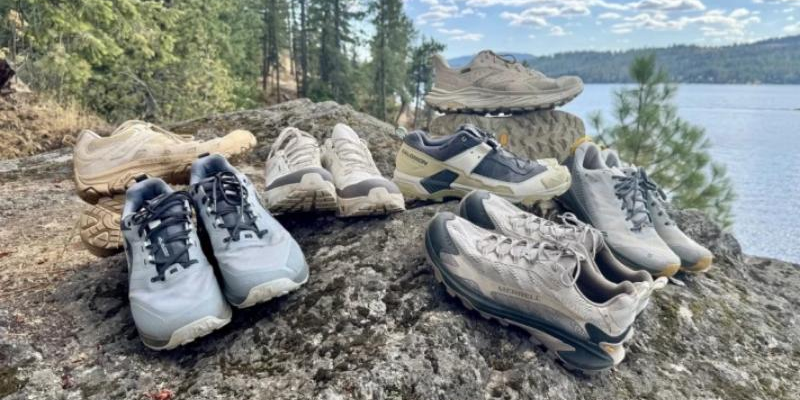
There are researchers who argue that high tops can even be weakening ankles. The stabilizing muscles are not exercised as much when external assistance is involved in doing all the work. Hikers who change their stiff boots to lightweight footwear occasionally suffer more instability at first due to lack of natural strength on the ankle.
When High Top Boots Still Make Sense
Although this is done, in some cases, high tops are the superior choice. The added stability is appreciated by hikers who carry loads greater than 30 pounds. Heavy bags reposition your body weight and add pressure to ankles when you stumble. This increased stress is recompensed with the external support.
Elevated boots are also predominant in rough landscapes where there are loose rocks, scree fields, and sharp scrambles. The hard construction defends against rock hits and gives a sure ground on which to perform technical footwork. Snow travel, off-trail travel, and muddy terrain often reward the extra protection of a taller boot as well.
Past ankle injuries alter the equation in a very significant manner. When you have sprained ankle previously, then the ligaments are stretched permanently. High tops offer the help needed to maintain a safety margin, which cannot be offered by compromised ligaments. Most orthopedic doctors prescribe high tops to patients with long-term ankle instability. If your ankles are already unreliable, the extra structure may be worth more than the weight penalty.
The Case for Low Top Trail Shoes
Their low top trail runners and hiking shoes have become hugely popular with thru-hikers and ultralight backpackers. Long-distance trails such as the Altra, Salomon, and Hoka are dominated by the brands used in hiking and in which the hikers cover 20 to 30 miles per day. These shoes are half the weight of the traditional boots and the fatigue over long distances is decreased.
The difference in weight is important than what most individuals think. Research indicates that a pound on your feet is equivalent to about five pounds on your back in energy usage. Less weighty footwear will enable quicker hiking with reduced effort, which some believe will prevent injuries due to fatigue and clumsiness towards the end of the day.
Low tops also let your feet flex more naturally, which can make long hikes feel less restrictive and reduce hot spots for some hikers. The low tops also dry quicker after crossings of water. Wet boots result in blisters and take days to dry up. Trail shoes can be wrung out and dry while you hike. In trips that require a lot of crossing streams, this empirical benefit overshadows theoretical ankle support.
Another advantage is ground feel. Lighter shoes often let you sense uneven terrain sooner, which can help experienced hikers react faster and place their feet more precisely. That benefit is especially noticeable on maintained trails and fast-moving long-distance routes.

How To Strengthen Your Ankles for Any Footwear
Irrespective of the height of the boot, ankle strength will help avoid more injuries than any type of equipment. Single-leg stands are an example of balance exercises, which develop proprioception, or the awareness of your body about the position of your joints. Stability is enhanced weeks after standing on one foot for 30 seconds a day.
Resistance band exercises and calf raise help to strengthen the muscles that actively stabilize your ankle. American College of Sports Medicine mentions that ankle strengthening programs are also recommended to all of the people who intend to make hiking a regular activity [3]. Powerful ankles fit on any shoes and any surface.
Useful drills include single-leg balance, heel raises, ankle circles, and slow step-downs from a stair or curb.
If you want better trail stability, train not only the ankle itself but also the calves, hips, and core, because balance is a whole-chain issue rather than a single-joint problem.
Match Your Footwear to Your Hiking Style
There is no common winner in the high top/low top debate. The presence of heavy packs, rough ground, or weak ankles is an indication of traditional boots. Slick footwear is preferred on maintained trails as the weight of light loads is relatively low. Numerous seasoned hikers have both and make decisions depending on the particular trip.
Test each of the styles on less serious hikes before taking the plunge on a grand adventure. Note the sensation of your ankles when you are tired of a long day. The level of support required by your body will be informed by your body and it may vary with what the marketing materials are assuring.
If possible, do one short hike in each style before committing to a longer trip. What feels stable in a store often feels different after several hours on uneven ground.
References
[1] High Top vs Low Top Shoes and Ankle Injuries - British Journal of Sports Medicine - https://bjsm.bmj.com/content/48/12/952
[2] Ankle Sprains and Instability - American Academy of Orthopaedic Surgeons - https://orthoinfo.aaos.org/en/diseases--conditions/sprained-ankle/
[3] Exercise for Ankle Stability - American College of Sports Medicine - https://orthoinfo.aaos.org/globalassets/pdfs/2017-rehab_foot-and-ankle.pdf
Related Posts
Outdoor Gear
Emergency Bivvy Bags: What They Are And When You Need One

Activities
High-Altitude Adventure: Best Guided Trekking Tours In The Himalayas
Outdoor Gear
Hiking Sock Materials Compared: Merino Wool Vs Synthetic Blends

Outdoor Gear
6 Most Breathable Hiking Shirts For Hot Weather Trails

Destinations
Best Mountain Hikes in New Zealand for First-Time Visitors

Guides and Tips